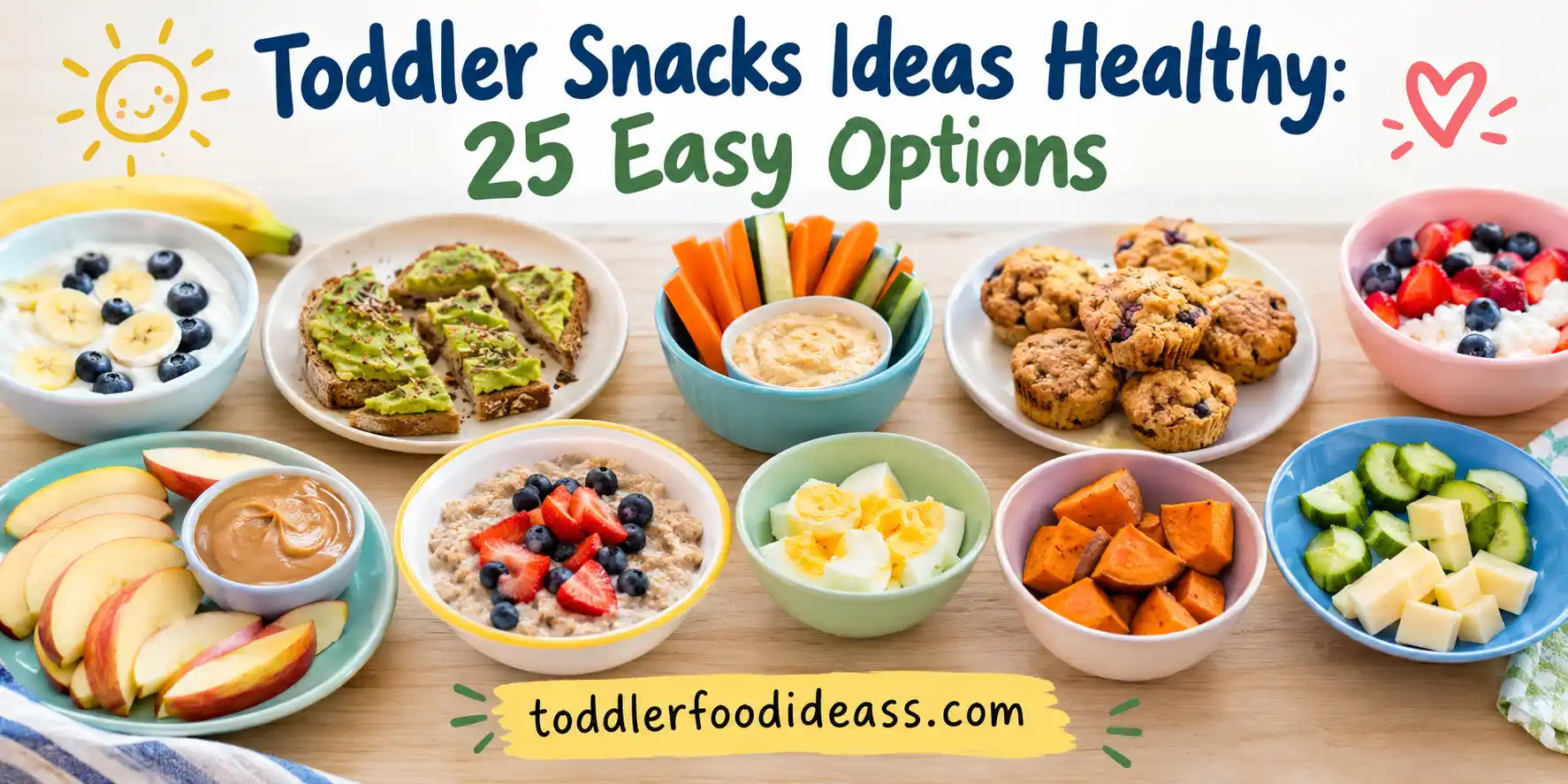
Healthy snacks can make busy toddler days much easier. If you need toddler snacks ideas healthy, focus on simple foods that provide nutrients without making snack time complicated. Fruit, vegetables, yogurt, whole grains, eggs, beans, and other protein foods can all work well. For full sit-down options later in the day, exploring toddler dinner ideas mince: 25 easy family meals can give you plenty of simple inspiration.
What Makes a Healthy Toddler Snack?
A good toddler snack does not need to be fancy. Think of it as a small bridge between meals. It can help a child stay comfortable until the next meal while giving them another chance to eat nutritious foods.
USDA guidance recommends offering toddlers a variety of fruits, vegetables, grains, protein foods, and dairy or fortified soy alternatives. Foods with less added sugar and sodium are generally better choices.
One easy approach is to combine two foods.
For example:
- Fruit + plain yogurt
- Whole-grain toast + avocado
- Cheese + soft pear
- Oatmeal + banana
- Hummus + soft cooked vegetables
Think of a snack like a small team. One food may provide carbohydrates, while another adds protein or healthy fat.
25 Toddler Snacks Ideas Healthy and Easy
1. Banana and Plain Yogurt
Mash a ripe banana and mix it with plain, unsweetened yogurt. It is soft, quick to prepare, and naturally sweet.
For younger toddlers, make sure the texture matches their eating skills.
2. Avocado Toast
Spread mashed avocado over a small piece of soft whole-grain toast. Cut the toast into small strips or bite-sized pieces that your child can handle safely.
You can add a little mashed tomato for extra flavor.
3. Apple and Smooth Nut Butter
Thinly spread smooth peanut or another nut butter over soft apple pieces or toast.
Never serve a toddler a large spoonful of nut butter by itself. Thick, sticky nut butter can be a choking risk.
4. Oatmeal With Berries
Make a small bowl of soft oatmeal and mix in mashed berries or finely chopped soft fruit.
Avoid adding sugar. Ripe fruit can provide plenty of natural sweetness.
5. Soft Pear Slices and Cheese
Serve ripe pear slices with small pieces of pasteurized cheese. This simple combination gives toddlers different flavors and textures.
Choose cheese with less sodium when possible.
6. Sweet Potato Bites
Cook sweet potato until soft. Cut it into small pieces that match your child’s eating ability.
Sweet potatoes are also an easy way to add a colorful vegetable to snack time.
7. Banana Oat Mini Muffins
Make small homemade muffins using oats, mashed banana, and other simple ingredients.
For young children, avoid recipes containing added honey before 12 months. CDC advises against honey for children younger than 12 months.
8. Hummus With Soft Vegetables
Offer a small amount of smooth hummus with soft-cooked carrot, zucchini, or another suitable vegetable.
Make sure vegetables are prepared to a safe texture and size for your toddler.
9. Egg and Toast
A small piece of cooked egg with soft toast can make a satisfying snack.
Cook eggs thoroughly and cut them into manageable pieces.
10. Cottage Cheese and Fruit
Serve cottage cheese with soft peaches, pears, bananas, or berries.
Check the texture and sodium content of the cottage cheese before serving.
11. Homemade Applesauce
Cook peeled apples until soft, then mash or blend them.
Homemade applesauce lets you control the ingredients. You do not need to add sugar.
12. Yogurt and Soft Berries
Plain yogurt topped with mashed or finely chopped soft berries is a quick option.
CDC recommends dairy foods without added sugars as part of a healthy eating pattern for young children.
13. Mini Avocado Quesadilla
Spread mashed avocado over a small soft tortilla. Add a small amount of shredded cheese and warm it until the cheese melts.
Cut it into small pieces before serving.
14. Soft Pasta With Peas
Cook small pasta until soft and mix it with cooked peas.
This can also be a useful way to introduce vegetables in a familiar food.
15. Banana Oatmeal
Mix mashed banana into cooked oatmeal.
For extra variety, add a little cinnamon if your child enjoys the flavor.
16. Soft Pear and Yogurt
Mash a ripe pear and serve it with plain yogurt.
This snack takes only a few minutes and works well when you need something simple.
17. Mini Chicken Pieces
Serve very soft, finely chopped or shredded cooked chicken.
Remove bones, skin, and tough pieces. Meat should be prepared in a texture that your child can manage safely.
18. Mashed Beans on Toast
Mash cooked beans and spread a thin layer over soft toast.
Beans provide protein and can be combined with avocado or vegetables for more variety.
19. Soft Pancake Strips
Make small homemade pancakes and cut them into strips.
You can add mashed banana, oats, pumpkin, or finely grated cooked vegetables to the batter.
20. Pumpkin Oat Bites
Combine cooked pumpkin with oats to make small soft bites.
Keep the recipe simple and avoid unnecessary added sugar.
21. Cucumber and Yogurt Dip
For toddlers who can safely manage the texture, offer finely prepared cucumber with a plain yogurt dip.
Always prepare raw vegetables according to your child’s chewing and eating skills.
22. Fruit and Oat Bowl
Combine soft banana, pear, or berries with cooked oats.
This is especially useful when your toddler likes foods that are soft and spoon-friendly.
23. Toast With Mashed Beans
Mash cooked beans until smooth and spread them thinly on soft toast.
You can add a little avocado for another nutrient-rich ingredient.
24. Soft Cooked Carrots and Hummus
Cook carrots until they are soft enough for your toddler’s developmental eating skills. Serve with a small amount of smooth hummus.
The bright color can also make vegetables more interesting.
25. Homemade Fruit and Yogurt Bowl
Combine plain yogurt with soft fruit such as banana, pear, peach, or berries.
This is one of the easiest healthy toddler snacks because you can change the fruit based on what you already have at home.
How to Build Better Toddler Snacks
You do not need a complicated recipe every time your toddler asks for food.
Try this simple formula:
Choose one main food + add one complementary food.
For example:
- Banana + yogurt
- Toast + avocado
- Cheese + pear
- Oatmeal + berries
- Egg + toast
- Hummus + cooked vegetables
This approach is similar to building a small meal. You simply use smaller portions and simple ingredients.
USDA MyPlate also recommends combining food groups when building satisfying snacks.
Healthy Snacks for Picky Toddlers
Picky eating is common during the toddler years. A child may love bananas one week and refuse them the next.
Try not to turn every snack into a battle.
Instead, offer one familiar food with one food your toddler is still learning to like.
For example, if your child loves toast but avoids vegetables, serve toast alongside a small amount of soft cooked carrot.
The familiar food can make the new food feel less intimidating.
CDC also recommends offering a variety of colors and involving children in preparing healthy foods.
You can let your toddler:
- Wash fruit
- Put berries into a bowl
- Stir yogurt
- Choose between two fruits
- Help arrange food on a plate
Even small jobs can make snack time more interesting.
Toddler Snacks Ideas Healthy Without Added Sugar
Young children do not need sugary snacks to enjoy food.
Instead of cookies, candy, or sweetened drinks, use naturally sweet foods such as bananas, pears, berries, peaches, or cooked sweet potato.
CDC guidance states that infants and young children should avoid added sugars.
For packaged foods, check the nutrition label. Flavored yogurt, snack bars, muffins, and other products can contain added sugars even when they appear healthy.
Plain yogurt with fruit is often an easy alternative.
Easy Snacks for Busy Parents
Snack preparation becomes easier when you prepare a few ingredients ahead of time.
At the beginning of the week, you can:
- Wash suitable fruits
- Cook a batch of oatmeal
- Prepare soft vegetables
- Portion plain yogurt
- Cook eggs for later use
- Make small homemade muffins
- Keep whole-grain bread ready
- Prepare soft beans or lentils
Store foods safely and follow appropriate refrigeration guidelines.
You can also create a small “snack station” in the refrigerator with foods your toddler can safely eat.
The goal is not to prepare everything from scratch every day. The goal is to make nutritious choices easier when everyone is busy.
How Often Should Toddlers Have Snacks?
Toddlers have small stomachs and may need regular opportunities to eat.
CDC notes that children may have about three meals and two to three snacks each day, depending on age and individual needs. Regular meal and snack routines can help children know what to expect.
Every child is different, so avoid forcing a child to finish a certain amount.
Watch hunger and fullness cues. A toddler may show they are finished by pushing food away, closing their mouth, or turning their head away.
Toddler Snack Safety Tips
Healthy food is only helpful when it is served safely.
Young children can choke on foods that are hard, round, sticky, or difficult to chew.
CDC lists foods such as whole nuts, whole grapes, popcorn, chunks of nut butter, hard candy, and large pieces of meat among choking hazards for young children.
Follow these basic habits:
- Have your toddler sit down while eating.
- Stay close and watch while they eat.
- Prepare food in an age-appropriate texture.
- Cut or cook foods as needed.
- Remove bones from meat and fish.
- Avoid whole nuts and other choking hazards.
- Do not let your child walk or run while eating.
Food safety also matters. Serve properly cooked foods and use pasteurized dairy products when appropriate.
If you are unsure whether a particular food is safe for your child’s age or eating ability, ask your pediatrician or another qualified healthcare professional.
What Drinks Go With Toddler Snacks?
Water is a simple choice between meals.
For children 12 months and older, plain whole cow’s milk or an appropriate unsweetened fortified dairy alternative can also be part of the diet.
Avoid using sugary drinks as a regular snack-time habit.
CDC recommends avoiding sugar-sweetened beverages for young children. Whole fruit is also generally a better choice than fruit juice.
A Simple One-Day Toddler Snack Example
Here is one simple example of how snacks can fit into a day:
Morning snack: Banana with plain yogurt.
Afternoon snack: Avocado toast with soft fruit.
Another option: Oatmeal with mashed berries.
The exact amount your toddler needs depends on age, appetite, activity, growth, and other factors.
Think of snacks as small opportunities to offer nutritious foods rather than meals that must be completely finished.
Final Thoughts
The best toddler snacks ideas healthy are often the simplest ones. Fruit, vegetables, whole grains, yogurt, eggs, beans, avocado, and other nutrient-rich foods can create plenty of variety without complicated recipes. Focus on balanced choices, age-appropriate textures, and safe preparation. Start with a few ideas your child enjoys, then slowly introduce new foods. Pick two or three snacks from this list and try them this week.
FAQ’s:Toddler Snacks Ideas Healthy:25 Easy Options
What are the healthiest snacks for toddlers
Some good choices include plain yogurt with fruit, avocado toast, oatmeal with berries, soft cooked vegetables, eggs, beans, and whole-grain foods. Choose options with little or no added sugar.
How many snacks should a toddler have each day
Many toddlers have about two to three snacks along with three meals. Individual needs vary, so parents should also watch hunger and fullness cues.
What are healthy snacks for a picky toddler
Try pairing a familiar food with a less familiar one. For example, serve toast with a small amount of avocado or fruit with plain yogurt. Avoid forcing your child to eat.
What snacks should toddlers avoid
Avoid foods that can cause choking, such as whole nuts, popcorn, whole grapes, hard candy, and large chunks of food. Young children should also avoid foods and drinks with added sugars.